When Phillippa’s son, Dan, was born in 1992, Duchenne muscular dystrophy care looked very different. Over nearly three decades, Phillippa navigated unsuitable housing, difficult transitions and frightening health crises while finding her voice as an advocate. Dan died in 2019, aged 27, but he wanted her to continue sharing their story and pushing for change.
From mother to advocate: turning Dan’s Duchenne story into change

Dan’s diagnosis catapulted me into a world I knew nothing about. I had two very young children, and family life quickly became a mixture of hospital appointments, therapies and trying to make ordinary life work. In those early years, we had weekly access to physiotherapy, occupational therapy, speech therapy and hydrotherapy through our local hospital. That joined-up support was invaluable, and it’s something that rarely happens now.
As Dan grew, the practical challenges grew with him. He came off his feet around nine or ten, and we had to change schools because his first school couldn’t meet his learning and physical needs. Travelling to a supportive mainstream school with specialist provision soon became part of our routine.
“Housing was one of the hardest and most persistent battles. We were moved five or six times between council properties, none of which was properly suited to Dan’s future needs.”
The older Dan got, the harder it became to manage his needs at home. He should not still have had to be pushed across our hallway to get dressed after a shower. These experiences opened my eyes to the hidden economic cost of disability, which I now talk about often in my advocacy work.
Growing up meant new battles
Like any young person, Dan wanted independence, friendship and fun. Academic qualifications were not what motivated him; he wanted to meet people, have a laugh and find his place in the world. A residential sixth form in Dorset gave him two brilliant years, with practical lessons about money and social life as well as the freedom of living away from home.
When he returned, our unsuitable housing made adult independence almost impossible. Eventually, Dan moved into a local care home, where he lived happily for several years. None of these decisions was simple. Every stage involved balancing safety, dignity, choice and what services could actually provide.
There were also frightening periods of illness. Pneumonia nearly took Dan from us several times. We were fortunate to have strong paediatric care and, later, excellent respiratory support from the Lane Fox team at Guy’s and St Thomas’. Their expertise helped us through some very hairy moments.
From no treatment to real hope
When Dan was born, there were no clinical trials and steroids were not part of routine care. I was told his life expectancy was 13. Dan lived to 27, and during his lifetime I watched the Duchenne landscape begin to change.
From research expanding, to standards of care developing, to families becoming part of clinical conversations; it was amazing to be an active part of. I learned how long treatment development takes and understood that much of the work I supported would not benefit Dan personally, but I believed progress for the next generation was worth fighting for.
There is so much more reason for hope today thanks to new research and treatment. The system isn’t perfect, and in someways, access to support has become more difficult. But compared with 1992, families are starting from a very different place.
Turning experience into advocacy
My advocacy began with the Duchenne Family Support Group we joined when Dan was diagnosed. Meeting families in the same boat gave me a vital network, and I later became vice chair and chair of the group. From there, I joined Muscular Dystrophy UK’s lay research panel, took part in the All-Party Parliamentary Group and spoke at public events. Dan used to send me off to Parliament with the instruction: “Go and give them hell.”
I went on to serve as a trustee at Muscular Dystrophy UK and contributed to work vital work for the community, including the Walton Report, which exposed the postcode lottery in neuromuscular services, as well as projects on ventilation. I have also been a trustee at Genetic Alliance UK, worked with the England Rare Diseases Framework, supported Duchenne UK’s standards-of-care work and most recently become an advisor for Pathfinders.
Patient voice has changed enormously. In the 1990s, families were rarely treated as partners.
“Now, people with lived experience help shape research, services and policy. Being part of an international clinical trial as a patient adviser showed me how powerful that contribution can be.”
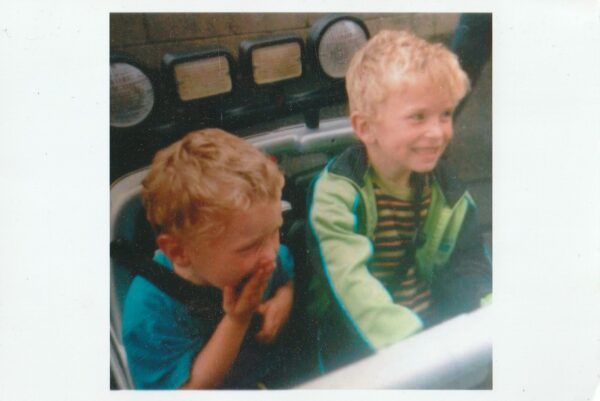
Having Dan took me down a path I never imagined, but I’m proud of all I’ve achieved over the years by his side. He was funny, cheeky, football-mad and an incorrigible flirt who charmed hospital staff as soon as he felt well enough. I’m grateful I can continue sharing Dan’s legacy, and use our experiences to help other families, through my continued work with the muscle wasting community.