When Rich’s son, Max, was diagnosed with Duchenne muscular dystrophy, they had no idea what lay ahead. After months of tests, and more months trying to come to terms with Max’s condition, they’re on a fundraising journey and just completed a two-day 100km walk! Rich tells us about Max and their journey.
"We thought our son just had dyspraxia – we never expected he had Duchenne"

Max turned nine recently. Saying that out loud still catches me off guard, because time seems to move differently now. Faster in some ways, heavier in others. In December 2024, when our eight-year-old son first began undergoing tests for muscular dystrophy, we had no idea how profoundly our lives were about to change.
A whirlwind of appointments and tests
In 2024, we had continuing concerns regarding Max’s mobility and development. We discussed this with Max’s school teacher and SENCO (Special Educational Needs Co-ordinator) lead, and a referral was made to the community occupational therapist. Following an assessment and school visit, an urgent referral was made to the community paediatrician who raised concerns about muscular dystrophy. It was a massive shock. Nothing could prepare us for how quickly everything escalated from that point: blood tests, consultants and suddenly this whirlwind we never asked to be part of. Through it all, though, the kindness of the professionals around us made a huge difference.
The testing process dragged on for months. Blood tests, referrals, appointments, and a lot of waiting. Christmas 2024 came and went with that uncertainty hanging over us, a fear we couldn’t shift no matter how hard we tried to focus on normal family life. It was March 2025 when we finally received the diagnosis of Duchenne muscular dystrophy. We’d never even heard of the condition, but just by the way the news was delivered, we knew it was bad. Hearing those words felt like the ground disappearing beneath our feet.
The signs that started it all
Looking back now, the signs were there from a young age. We just didn’t recognise them for what they were. Max was always a bit clumsy, a bit unsteady. We put it down to dyspraxia or a lack of coordination. When he played football for a regular boys’ team, he didn’t stand out at first. But over time, I started coming home and saying to my partner that something didn’t feel right. He seemed slower, less involved, and more tired. I even questioned whether he was being lazy on the pitch, which I feel bad about now.
Stairs became another clue. We used to tell him to take them one foot at a time, not both together. Only later did we realise he couldn’t do that. He’d fall over more than other kids. At the time, we thought he was just a bit dopey. We had no idea what his body was fighting against.
Max’s strength and love for life
Since his diagnosis, Max has been incredible. Truly. He attends countless hospital appointments with a smile on his face, cracking jokes and showing the doctors his cheeky side.
He plays football for Chasetown Disability Football Team, goes swimming every week, and plays cricket in the summer. He’s a Wolves season ticket holder and loves match days. Sport is his happy place, and we’ll do everything we can to keep him there.
We try to be as upfront and honest as we can with Max; he understands that his muscles don’t work as well as other children’s, and that he’s taking medication to help preserve them for as long as possible. He doesn’t know the full extent of what lies ahead though.
Max is currently on steroid treatment and a medication called Translarna. He’s also just been accepted onto a new clinical trial for Givinostat, which we’ll begin in January.
“It’s still early days but knowing there are treatments and research happening gives us something to hold on to.”
An ultra challenge for Max
As a family, the months after diagnosis were indescribably awful, of course. But we reached a point where we realised there’s nothing we can do to change what Max has. What we can change is how we live with it. We’ve chosen to focus on living life to the fullest and doing something positive in the face of something so cruel.
That’s how fundraising came into our lives. Shortly after Max was diagnosed, a friend of the family offered to run a 10k and raise money, and he raised £1,000 in just a couple of months. From then, we wanted to do more.
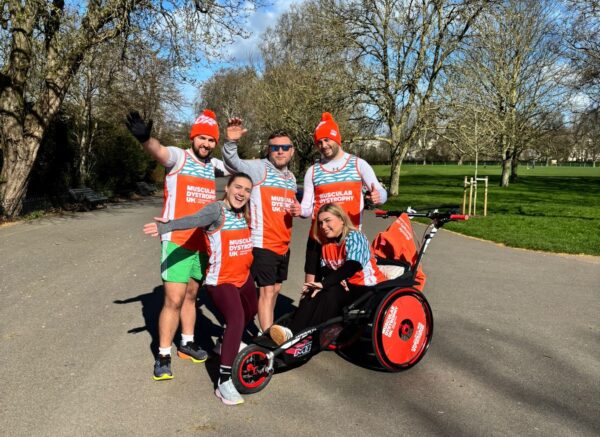
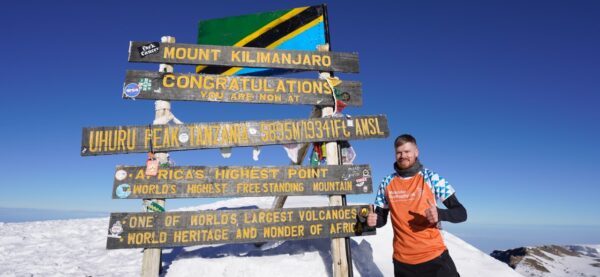
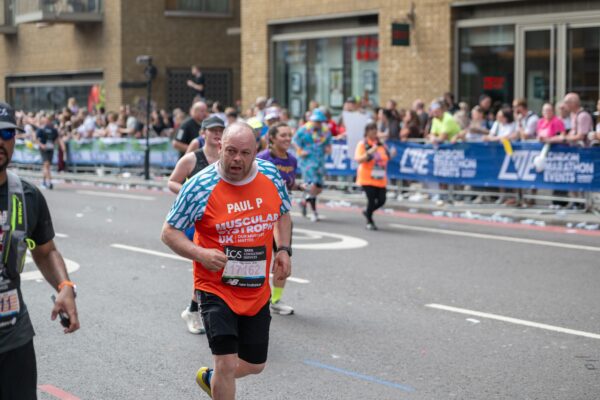
In May 2026, four of us completed the Jurassic Coast Ultra Challenge, which involved walking 100 kilometres over two days, across extremely hilly and demanding terrain. It was completely outside our comfort zone. None of us have done anything like that before. Training was tough with early mornings, long hours and trying to fit it all in around work and family life. But every step we took felt like it had purpose.
Max is our purpose. And he’s already shown us what true strength looks like.

Support Rich's fundraising
By supporting Rich’s efforts, you’ll help fund research and support for individuals living with muscle wasting conditions.