Catherine’s son, Ezra, has spinal muscular atrophy (SMA) type 2. She shares the pain of watching him lose strength, the hope treatment has given their family, and why she believes every baby should be screened for SMA at birth.
“If SMA had been included in newborn screening, Ezra’s life could look so different”

Ezra is our youngest of four; bright, beautiful and full of character from the very start. Everything seemed as it should in the first eight months or so of his life. Ezra would crawl and shuffle along the furniture on his knees, but he never tried to pull himself up onto his feet. His dad and I kept telling ourselves not to worry, but deep down I knew something wasn’t right.
I contacted the health visitor when Ezra was around 10 months old, but we were told walking and standing weren’t usually a concern until later. So we waited. That waiting was awful, because while everyone else tried to reassure me, my instinct was screaming that my little boy needed help.
Watching Ezra get weaker
Over the next few months, Ezra began to struggle more. He used his head to push himself up from the floor, almost like a third hand. His crawling slowed. His arms would suddenly give way and he would hit his head, leaving bruises. I started feeling scared to let him move around, which is a horrible thing to feel about your own child.
I lost sleep and would cry with worry. People sometimes said, “Maybe he just doesn’t want to move.”
“But I knew Ezra wanted to move. I could see the determination in him. Something was stopping him, and I felt helpless because I didn’t know what it was.”
When Ezra was finally seen again, the health visitor referred him to a physiotherapist who was amazing. She knew immediately there was something underlying and referred him to a paediatrician.
Getting the diagnosis
Then came the appointments, blood tests and long waits. We watched Ezra get weaker while we waited for answers. We waited six months for genetic blood test results, only to be told the samples had been lost and we had to start again.
By then, Ezra could barely crawl. He spent most of his time lying down and could no longer keep up with his brothers, sister and cousins. I was watching pieces of his independence disappear, and I couldn’t stop it. As his mum, that broke me.
In August 2024, Ezra’s dad and I were told he had SMA type 2. Our hearts shattered, but at the same time, we finally had an answer.
The difference treatment made
Everything moved quickly after that. Ezra started Risdiplam, one of the treatments for SMA and within weeks we could see changes. He lifted his head higher. He crawled a little faster. He fell less.
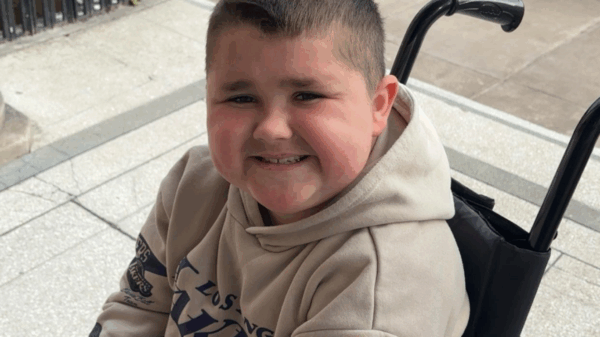
Ezra’s now four and is clever, funny and doing so well, but he uses a wheelchair full time. We’re currently waiting for a home that will suit his needs and give him more independence. His siblings have learned how to adapt their play so he can join in, and as a family we do everything we can to make sure he’s included.
Why newborn screening matters
Ezra knows he has SMA, but he doesn’t fully understand what that means. He asks me, “Why don’t I walk?” and “Why can’t I jump?” Those questions are so hard to answer. He is a typical four-year-old boy who wants to keep up with his friends and family, and some days I can see how frustrated he feels.
We try to focus on what Ezra can do, but I know one day I will have to explain that he will never walk, run or jump like other children. What makes it even harder is knowing how much treatment has helped him and, therefore, imagining how he would be so much stronger, maybe even walking, if he’d been diagnosed and treated earlier.
“For our family and so many others, newborn screening is the difference between finding out after a child has already lost strength and finding out early enough to protect their future.”
I can’t understand why SMA is still not included in the newborn heel prick test in Northern Ireland. Ezra has been lucky that his lung function and spine are still good, but not every child with SMA is that lucky. It’s not just about walking; early diagnosis and treatment can save lives.
No family should have to watch their baby get weaker while they wait for answers. If SMA had been included in the heel prick test, Ezra’s life could have looked so different. I want every baby to have that chance.
We urgently need every baby in the UK to be screened for SMA shortly after birth. We can’t sit by while delayed diagnosis can steal a baby’s first steps, first milestones and future opportunities.