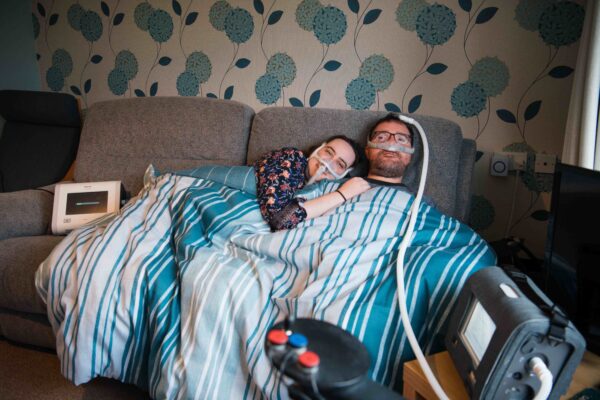
Sara lives with rigid spine syndrome muscular dystrophy and relies on Personal Independence Payment (PIP) to help cover the additional costs of living with a progressive condition. She shares how PIP supports her independence, why accessible healthcare still isn’t a reality for everyone, and why the benefits system should better recognise the lifelong nature of progressive conditions.
Progressive conditions don't get better. The PIP system should recognise that

Rigid spine syndrome muscular dystrophy means adapting every single day. It’s a rare, progressive condition that causes muscle weakness and severe stiffness of the spine. I’m a full-time wheelchair user, and while I always try to remain as independent as possible, my condition affects almost every aspect of my daily life.
From the moment I wake up, everyday tasks require careful planning. Getting out of bed, getting dressed, preparing meals, showering and managing household jobs all take more time, energy and often require specialist equipment or additional support. I’ve learned to plan my days carefully so that I can conserve energy and continue doing the things that matter most to me.
Staying independent at work
I’m proud to be able to work, but managing a progressive condition alongside employment isn’t without its challenges.
Like many disabled people, I rely on reasonable adjustments, accessible environments and adapted ways of working. Tasks that colleagues might complete without thinking can require additional planning, equipment or assistance for me. Fatigue and muscle weakness are part of everyday life, so balancing work with managing my health is something I constantly have to think about.
For me, independence doesn’t mean doing everything alone. It means having the right support and adjustments in place so I can continue contributing at work and living life on my own terms.
PIP helps cover the extra costs of disability
People often don’t see the hidden costs that come with living with a disability. PIP helps bridge that gap by contributing towards expenses that simply wouldn’t exist if I didn’t have muscular dystrophy.
Preparing food is one example. Because of my muscle weakness, chopping ingredients can be difficult and exhausting, so I often buy pre-prepared fruit, vegetables and other ingredients. It might seem like a small adjustment, but those additional costs quickly add up.
Travel is another significant expense. I drive a wheelchair-accessible van with a rear-entry ramp, which means I need around three metres of space behind the vehicle to get in and out. Because of this, I often can’t use free on-street parking and instead have to rely on paid car parks, particularly when attending hospital appointments in London or staying overnight for sleep studies.
PIP also helps me overcome barriers to healthcare. I pay for a private phlebotomy service to carry out NHS blood tests at home because my local blood test centres don’t have accessible toilet facilities. Staying well hydrated is important to ensure they can get my blood samples, but without accessible facilities, attending appointments can be incredibly difficult. Having blood tests at home removes one of those unnecessary barriers and allows me to access healthcare with dignity.
Even keeping my home warm comes at an extra cost. Cold temperatures increase pain and discomfort in my muscles, so heating isn’t simply about comfort; it’s an important part of managing my condition.
“PIP isn’t a luxury. It helps cover the unavoidable extra costs that come with living with a disability and allows me to maintain my independence.”
The system needs a better understanding of disability
PIP provides essential financial support, but the application process should be much fairer.
Assessments should be carried out by professionals who understand the conditions they’re assessing. For people living with rare or complex conditions, a lack of specialist knowledge can mean the impact of a condition isn’t fully recognised.
The same should apply to those making decisions on claims. Better understanding of progressive conditions, combined with greater confidence in medical evidence, would lead to more consistent and accurate decisions rather than relying on assumptions about what someone can or can’t do.
Progressive conditions don’t get better
One of the biggest frustrations for many people with muscular dystrophy is the need to repeatedly prove something that hasn’t changed. My condition is progressive. It won’t improve. The expectation is that it will remain the same or gradually deteriorate over time.
“For people with lifelong progressive conditions who already receive the highest level of support, repeated reassessments can be stressful, time-consuming and emotionally draining, despite being unlikely to produce a different outcome.”
The benefits system should better recognise this reality. Reducing unnecessary reassessments would allow people to focus on managing their health, maintaining their independence and living their lives, rather than repeatedly having to justify their disability.

A benefits system that truly supports everyone
We must urgently demand a benefits system across the UK that recognises all our needs, and our right to live independently and with dignity.
Sign the petition. Stand with everyone that lives with a muscle wasting condition and who receives PIP or ADP.
Change is possible. And it starts with us acting today.