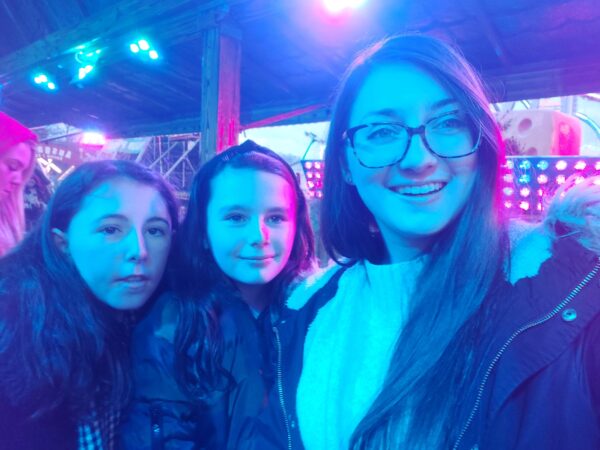
After being diagnosed with limb girdle muscular dystrophy (LGMD) at seven years old, Millie has spent her life adapting to the challenges of a progressive muscle wasting condition. This July, she’s taking on a 150-mile walking challenge to fundraise and improve awareness of LGMD.
Turning a negative into a positive: my 150-mile challenge with LGMD

At school, something as simple as getting up from the floor after assembly was a challenge, and I would often need to use my hands to push myself up. PE lessons were particularly difficult, especially activities involving running, jumping and keeping up with my classmates. At the time, I didn’t understand why these things were harder for me, until I was diagnosed with LGMD when I was seven.
My sister and I understand each other in a way very few people can
When my younger sister, Lola, was born, she was tested almost straight away. Sadly, she also has LMGD and has never been able to walk. Growing up, limb-girdle has always been part of our lives.
As I’ve got older, I’ve realised just how difficult the news that both of us had a progressive condition must have been for our family.
“It’s heartbreaking knowing that someone you love will face the same challenges and uncertainties that you do.”
However, having each other has been a huge source of strength for us. We understand what it’s like to live with LGMD in a way that very few people can, and me and Lola support each other through the good days and the difficult ones.
At 25 now, LGMD affects almost every aspect of my daily life. Things many people take for granted, such as walking long distances, climbing stairs, standing for long periods, or carrying shopping, require much more effort and energy. Fatigue is one of the biggest challenges, and I have to be mindful of how much I do and when I need to rest. Living with a progressive muscle wasting condition means constantly adapting, but I try not to let it stop me from doing the things I enjoy or achieving my goals.
Turning a negative into a positive
The idea for my fundraiser came when I was on holiday a couple of months ago with my friends and I found it extremely difficult, struggling more than I ever have. This got me down and feeling quite negative.
“However, I thought, right! That’s enough of being sad. How can I raise awareness? That’s where my fundraising idea came from – turning a negative into a positive.”
I wanted to raise awareness of limb girdle muscular dystrophy and support the incredible work being carried out by Muscular Dystrophy UK. Living with a rare condition can sometimes feel isolating, and I wanted to do something positive that could help shine a light on the realities of living with LGMD while raising money for vital research.
Walking 150 miles in a month would be hard for most – but it’ll be 10 times harder for me
Throughout July, I’ll be walking 150 miles, which works out at around five miles every day. I’ll be completing walks across a variety of local routes and countryside trails with loved ones supporting me. Some days will be more challenging than others, especially when fatigue and muscle weakness come into play, but I’m determined to keep going and reach my goal.
For most people, going for a walk is something they don’t think twice about. For me, every mile requires extra effort. The best way I can describe it is like walking with heavy weights attached to your legs while your muscles gradually become more fatigued with every step.
There are days when living with LGMD is incredibly frustrating, especially knowing it’s a progressive condition with no cure. However, it has also made me resilient and determined.
“It’s taught me not to take things for granted and to appreciate what my body can do rather than focusing solely on its limitations.”
Muscular Dystrophy UK has always been there for us
Muscular Dystrophy UK has been part of our journey for as long as I can remember. After my diagnosis and my sister’s diagnosis, the charity became an important source of information, guidance and hope for our family. Their work gives people like me hope that one day there will be more treatment options.
Like anyone else, I have ambitions and goals for the future. I want to continue building a successful career at my current job, where I work with an amazing team who are so supportive of me, helping others and making a positive impact through my work.
While LGMD is part of my life, it doesn’t define who I am, and I’m going to prove that in July.

Support Millie's fundraiser