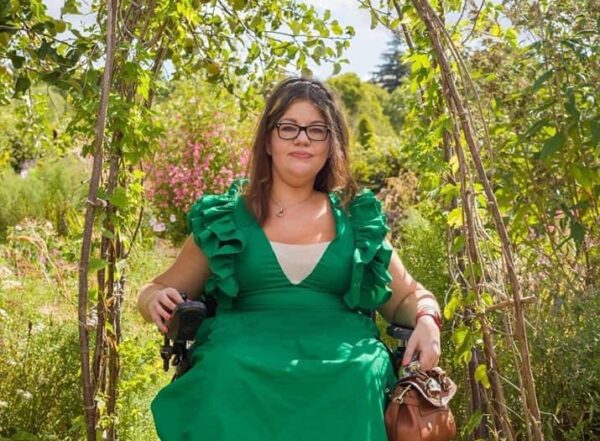
Meriel and Daniel both need to wear ventilators full time, which is causing increasing difficulties for identity verification and facial recognition software. They share their experiences of barriers they’ve come up against, how they navigate these, and what they feel should be done to improve inclusivity.
The challenges of using a ventilator mask in the age of facial recognition technology

Meriel’s story

I’m about to turn 18, which should feel like a milestone of independence. For most people things like opening an adult bank account don’t require a second thought. It turns out, it’s far more complicated for me though.
I’d been using a junior banking app for a while, linked to a parent account, and loved it. So when a notification popped up saying I could “graduate” to an adult account, I started the process straight away. Little did I know how long that process would actually be.
When things started to get difficult
Due to having nemaline myopathy, I use a non-invasive ventilator 24/7 and wear a mask all the time. It’s just part of my life. But it’s also something that modern technology really struggles with.
My first hurdle was identification. The only accepted forms of ID were a passport or driving licence, but given that I can’t drive and flying is extremely difficult for people like me, I don’t have either, and my Home Office-accredited ID card wasn’t accepted.
My only option was to apply for a passport, which felt like an unnecessary expense just to prove who I am, but I didn’t really have a choice.
When my passport arrived, I tried again. I soon ran into another issue though, when the app asked me to verify my identity by taking a selfie. After several attempts, I managed to get through the process and thought I’d finally succeeded. But then a message appeared saying my ID couldn’t be verified and asking me to try again. I tried so many times and each time got the same frustrating message. The money from my junior account hadn’t transferred over yet, so I was left in limbo; unable to access what I already had and unable to complete the process.
Hitting a wall
I spent a long time messaging the support team, explaining my situation and trying to find a solution. Eventually, without much explanation, my account was simply closed. I couldn’t access my account. I couldn’t even continue the conversation with the support team. It was incredibly frustrating, especially when all I was trying to do was something most people wouldn’t think twice about. I felt like I had no choice but to escalate the issue further.
After reaching out to a higher authority at the bank, I eventually received a response saying the issue had been escalated.Ten days later, with the help of a specialist support team, I was finally able to open my account.
While I’m glad the issue eventually got resolved, it shouldn’t have been that difficult. And it’s not just banking: everyday technology is becoming harder to use. Things like fingerprint recognition being replaced with Face ID on phones mean I have to enter passcodes manually every time. These issues seem small, but when you have to fight for even the simplest things, it becomes exhausting.
Daniel’s story
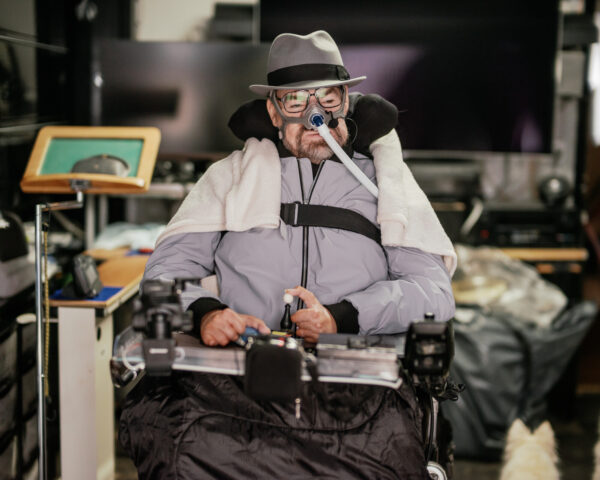
For me, the challenges with facial recognition and identity verification have been going on for years. Eventually I just stopped trying.
I gave up trying
It’s not just that the technology struggles, it’s also the physical effort involved; I’d have to ask someone to lift my phone, position it, and hold it up so it can try to scan my face. I always look for alternative methods, but there seem to be fewer of them now, especially since I don’t have a passport or a driving licence.
Video platforms like Zoom or Teams can’t properly recognise my face, so features like background blur or filters don’t work. Even photo software, is hit or miss when trying to focus on my face.
What’s more concerning is when it gets things wrong. Some systems assume we’re the same person if there are two people wearing ventilator masks. That’s worrying when you think about facial recognition being used for security or identity verification.
More services are starting to require identity verification, whether it’s for gaming platforms, social media or age checks. This means what I can access and use is starting to feel limited.
What needs to change
There needs to be more flexibility in how people can verify their identity. Alternative forms of ID like blue badges, bus passes or other official documents should be accepted, especially when combined with something like a birth certificate. I’ve considered getting a passport just for verification purposes, but I can’t really justify the cost. And I shouldn’t have to.
Some people have suggested improving facial recognition systems so they can better recognise people wearing ventilator masks. While that might help, it also raises questions about privacy and how that data would be used.
In a world where technology is becoming more central to everyday life, it’s important that it works for everyone. For people like us, it often doesn’t. This needs to be addressed as advancing technology is only going to increase.