
Get the latest news, inspiring stories, upcoming events, and valuable support services delivered straight to your inbox.
Highlights from the 31st London myology forum
16 December 2025
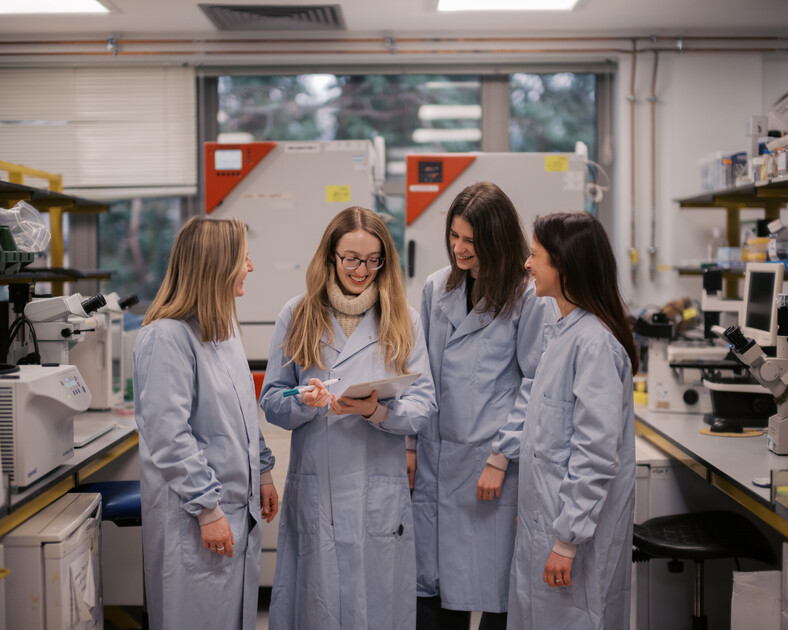
The London Myology Forum brings together leading scientists to share cutting-edge research into muscle conditions and potential treatments. The 31st meeting, held in partnership with King’s College London, University College London and The Royal Veterinary College, featured exciting updates across several rare conditions.
Duchenne muscular dystrophy (DMD) was a key focus. Emeritus Professor Terence Partridge, from University College London, discussed a rare phenomenon where some muscle fibres in DMD can still produce dystrophin – the protein that keeps muscles healthy – despite the genetic change that usually prevents this. These myofibres naturally skip sections of the gene, so the instructions fit together properly, allowing the body to make a shorter but still working version of dystrophin. Treatments are being developed to copy this process and help the body produce dystrophin. Dr Thomas Roberts, from University of Oxford, discussed the challenges of turning this approach into effective therapies and Dr Elisa Villalobos from University College London described how muscle stiffness in DMD affects repair.
The meeting also highlighted LAMA2-related muscular dystrophy, another rare muscle wasting condition. Dr Veronica Pini, from University College London, discussed her research investigating why symptoms vary so much between individuals. While changes in the LAMA2 gene cause the condition, other genes may influence its severity. Understanding these “modifier genes” could lead to new ways to treat or slow progression.
Finally, Drs Eugenia Carraro from King’s College London and Valentina Lionello from University College London, presented work on creating “mini muscles” in the lab. These 3D models mimic real muscles from people, for example with X-linked myotubular myopathy, helping scientists study various conditions and test potential treatments in a system that closely reflects human biology.
Events like the London Myology Forum are vital for collaboration and innovation. They spark new ideas and projects that push research forward. We’re proud to support this important work.
This article was written in collaboration with Professor Peter Zammit from King's College London.
More news
First patient receives treatment in new gene therapy trial for XLMTM
May 5, 2026
Scientists find clues that a protein may play a role in XLMTM
November 10, 2025