Hollie’s mum, Ann, shares their story of hope for other families with SMA. Ann tells of the initial heartbreak and uncertainty when Hollie was diagnosed with SMA type 1, but how her daughter now has the same love for life as any other five-year-old after receiving gene therapy.
“We didn’t know if my daughter would be able to talk or eat – now she’s thriving thanks to SMA treatment.”

Hollie wasn’t diagnosed with SMA type 1 until she was five months old, despite symptoms being there from a much earlier age. She was a breech baby, so she was put into a hip harness at six weeks and had regular check-ups with a paediatric doctor. She wore the harness for three months, and throughout all of that, nobody picked up that anything else was wrong. Looking back, it’s hard not to question how it was missed by medical professionals.
Seeing Jesy Nelson’s interviews recently about her twins having SMA has been a painful reminder of the guilt parents often feel around receiving a diagnosis too late. But you can’t blame yourself. If doctors don’t pick it up, how is a first-time mum meant to? SMA is such a rare condition, and Hollie is a prime example of how easily it can be missed.
Hollie was the second child in the UK to receive gene therapy treatment
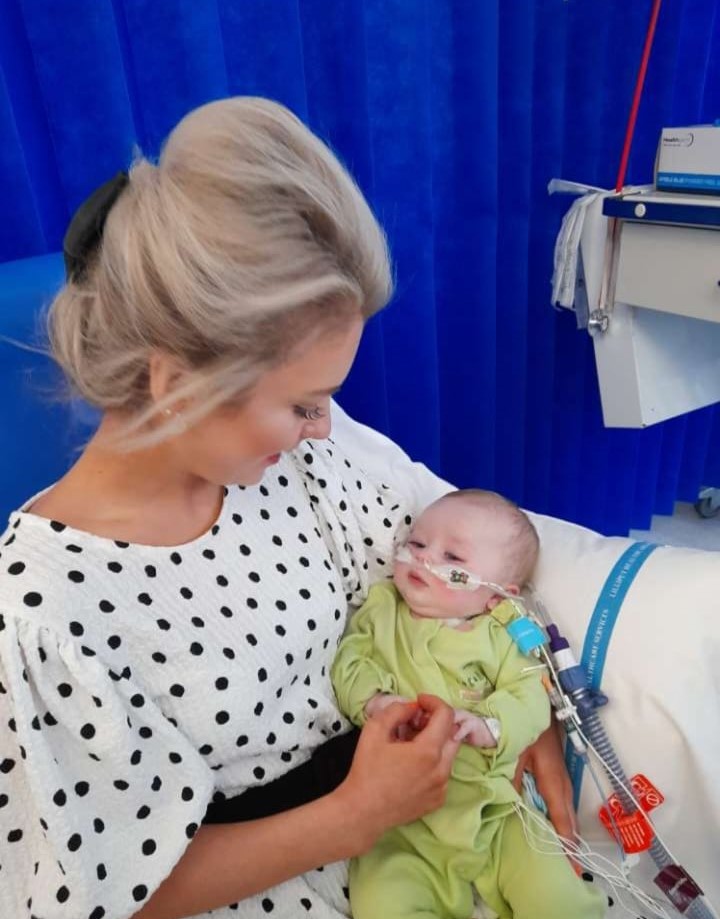
Hollie was only diagnosed when she was rushed to hospital at four and a half months with a bad chest infection. The doctors realised that her lungs weren’t strong enough to cough properly, and that’s when they started doing tests. Everything changed when we were told our baby had SMA.
Hollie received gene therapy, called Zolgensma, at nearly six months old. She was the first child in Northern Ireland to receive the treatment and the second in the UK. We had no idea what the future would look like for our daughter. The doctors didn’t know if she would be able to talk, eat or sit up. That uncertainty was incredibly difficult. You prepare yourself for the worst while trying to stay hopeful at the same time. Now, when I look at her, I can’t believe how far she’s come.
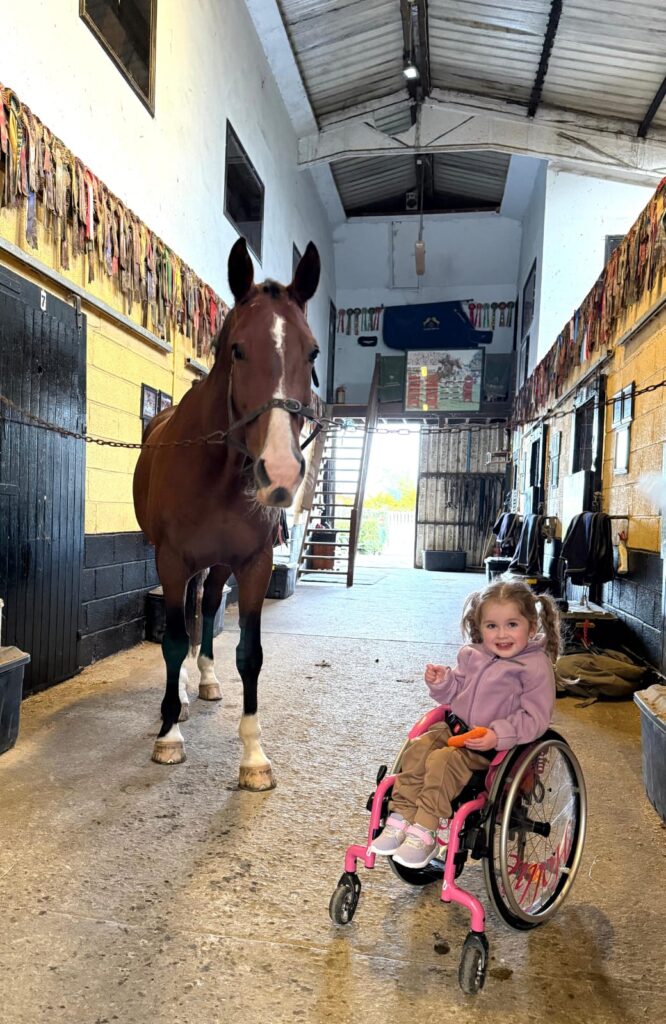
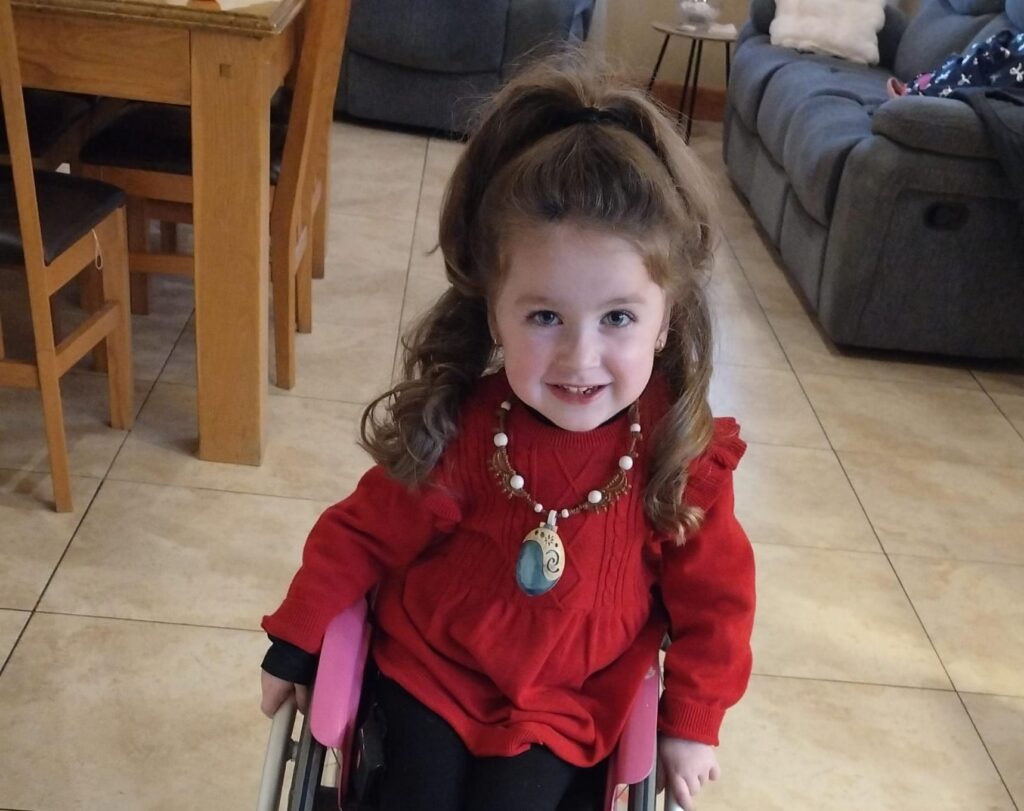
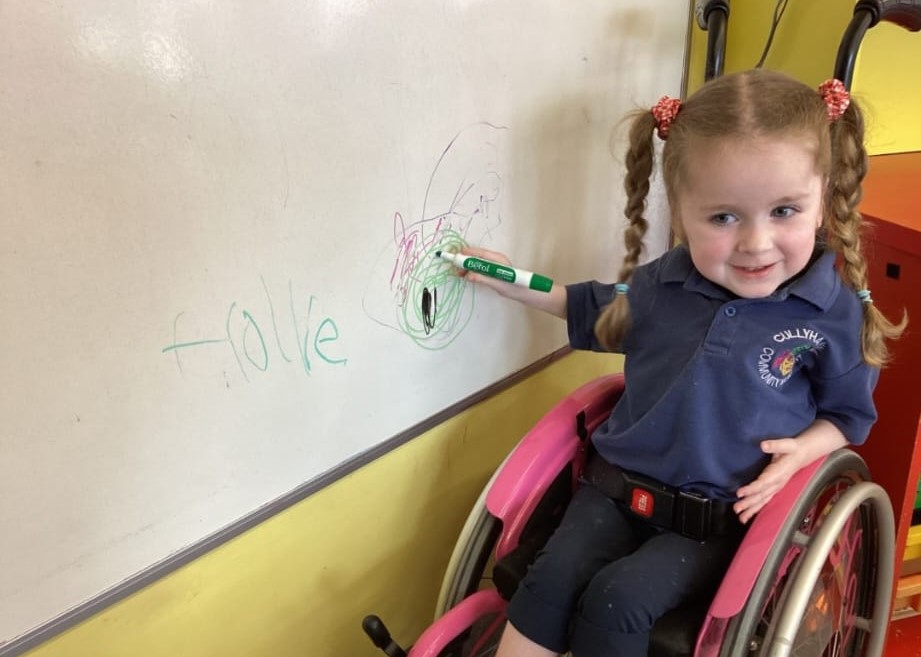
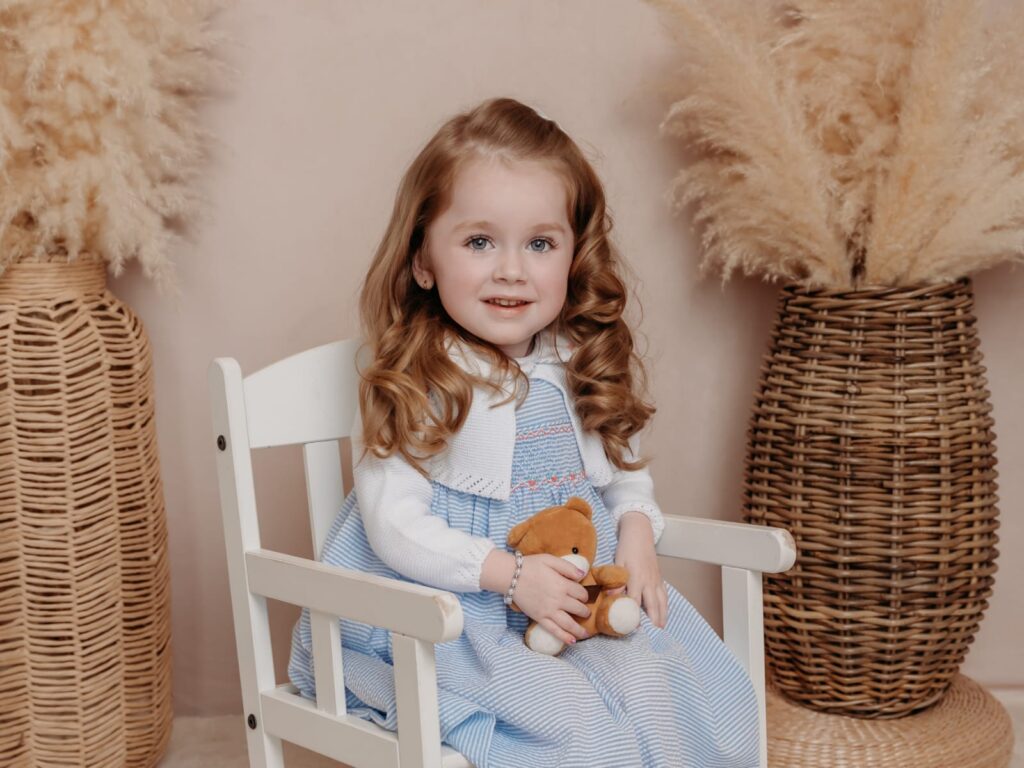
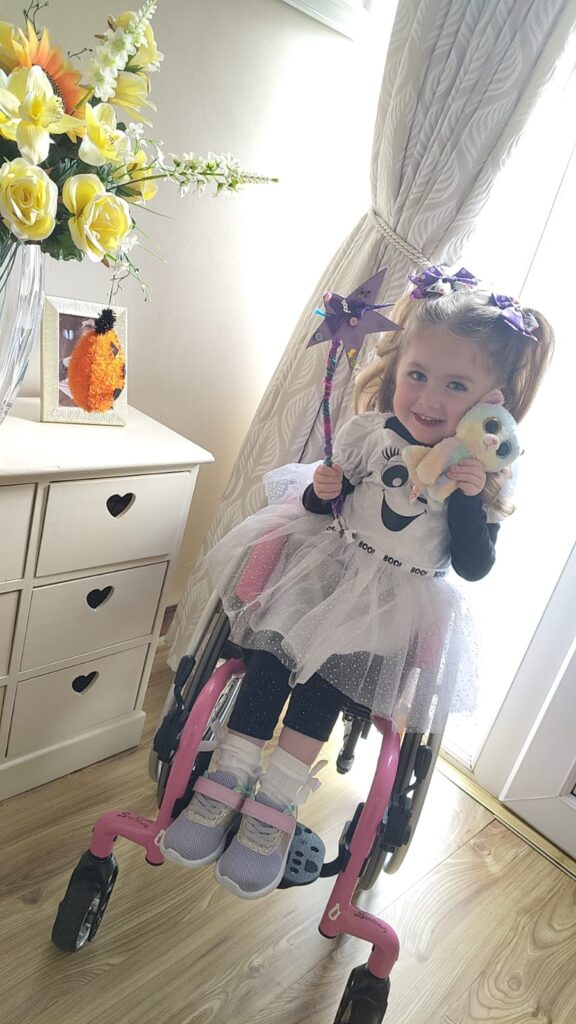
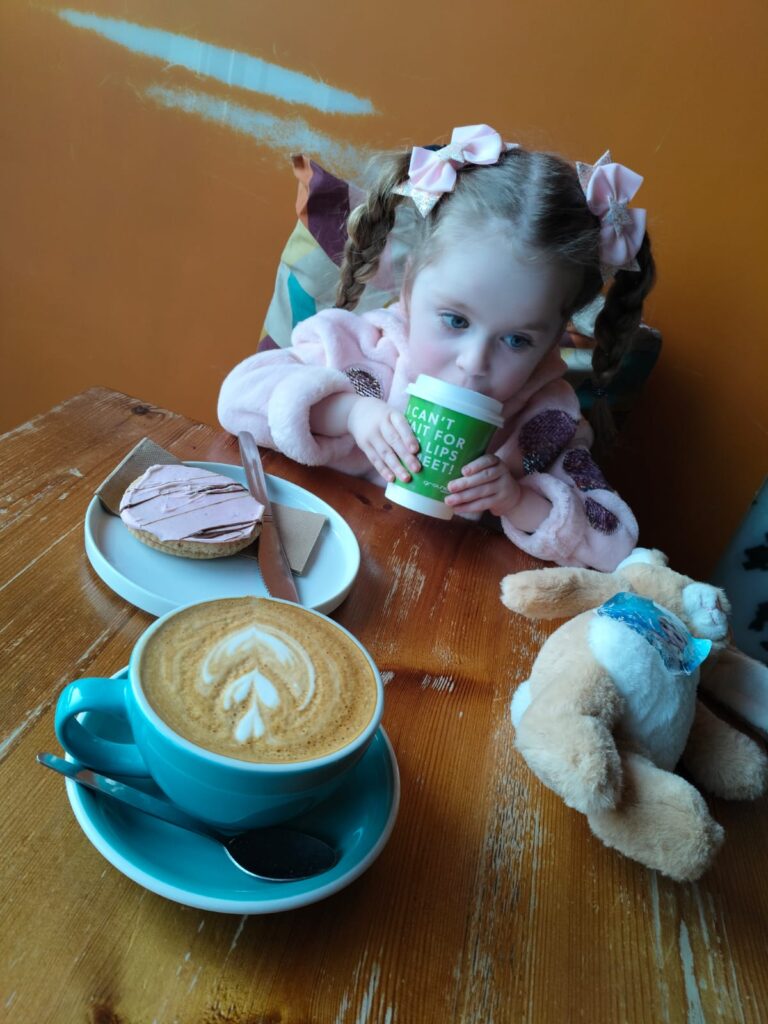

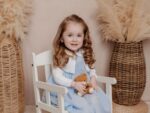
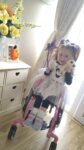
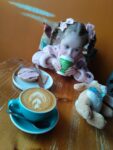
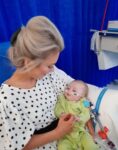
Hollie is doing better than we ever dreamed
Hollie is thriving. She’s got so strong. She has head control now, which we were told she’d never have. She can sit, she can bum shuffle, and she’s starting to weight-bear.
Hollie used to need a ventilator at night to help her breathe, and she’s been off it for nearly three years now. I never imagined that’d be possible when she was younger.
She loves swimming, horse riding and drama class. She’s in mainstream school. She eats, she drinks, and she never stops talking. She loves playing and she loves people. She’s an absolute character and so funny. I’m incredibly proud of her and wouldn’t change her for the world. Every day she’s getting stronger.
Hollie can push herself in her manual wheelchair. She also has a little tricycle she scoots around on, and a walker to help her take steps. We’re currently in the process of getting her an electric wheelchair which is partly funded by Muscular Dystrophy UK. The cost is a couple of thousand pounds, so it’s not something we’d be able to manage ourselves. That support makes such a huge difference to Hollie’s independence and our family life.
Finding support and community
When Hollie was first diagnosed, we didn’t know anyone else in Northern Ireland with the condition. It felt very isolating at the beginning. We met Graham, the charity’s Advocacy and Support Officer for Northern Ireland, at one of Hollie’s hospital appointments, and that support has been amazing.
It was such a comfort to know there was someone there who understood. Graham was so kind and approachable. He made it clear that support was there if we needed it and just knowing you can message or chat to someone who gets it makes a massive difference.
Through that support, we’ve also met other families. There are now another two or three children in Northern Ireland who’ve received the treatment since Hollie. Many families have a really rough few years at the start, but they also go on to have positive stories.
Have faith that better days are coming
The biggest thing I want other parents, especially first-time mums, to know is not to blame themselves. It’s so easy to think “I should have noticed sooner or pushed the doctors harder,” but you weren’t to know.
The other point I want to get across is that life will become joyful again. Hollie’s journey hasn’t been easy, but her life is so full now. She’s happy, strong, and loves life. And as a mum, that’s everything I wish for my daughter.

Apply for a JPT grant
Through funding from the Joseph Patrick Trust (JPT), we offer grants to help cover the cost of powered mobility equipment.

SMA & newborn screening explained
Learn more about SMA and the process to add it to the national newborn screening programme.