
Our Chief Executive, Andy Fletcher, reflects on the last 12 months since launching our new ten-year strategy.
One year on since the launch of our new strategy
26 October 2026
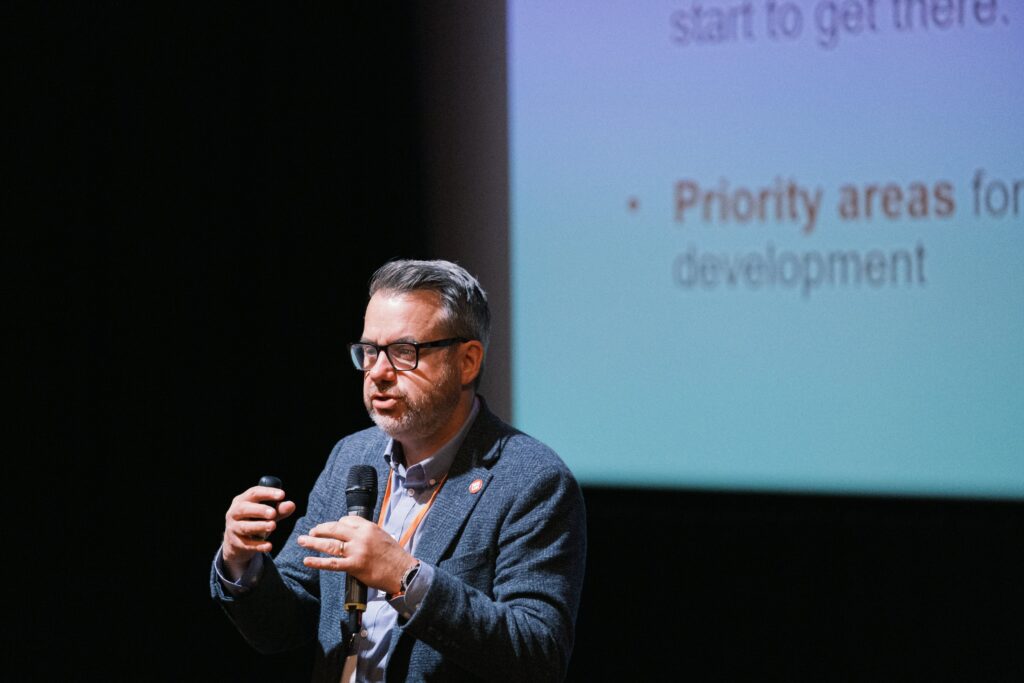
A year ago, we launched our new ten-year strategy to create a world without limits for people living with muscle wasting conditions.
We committed ourselves to bold ambitions to transform diagnosis, reach every person with a condition, accelerate access to new treatments and support people to live their lives to the fullest.
To make these ambitions more than just slogans on a wall, we knew we had to change.
We needed to double the amount of money we spend on research, support and campaigning over the next decade. To better harness technology and data. To increase understanding of these rare conditions and make our organisational culture something to celebrate.
Our plan was shaped by our community. And we made a commitment to share our progress, to celebrate what has been achieved and be open about what is proving more challenging.
So, one year on, how are we doing?
Five things we have achieved
Working with partners, we have campaigned for spinal muscular atrophy (SMA) to be included in newborn screening across the UK. We have made progress, with Scotland including it in their screening programme in the spring and England launching a programme to screen all babies for SMA as part of a national evaluation.
We have launched a pilot working with hospitals in the North West of England, to support more people with a muscle wasting condition. Neuromuscular professionals can now refer people directly to our team for tailored support.
We said we wanted to provide more support and we have. We have extended our helpline hours to make it more accessible, invested in our expert patient information and launched a pilot grant scheme for housing adaptations.
Our strategy highlighted a gap in knowledge of how many people live in the UK with a muscle wasting condition. So, we have commissioned research from a team at Keele University to understand the prevalence of conditions, so we can better support our community and campaign on their behalf.
We have played our part in 12 appraisals of new treatments for muscle wasting conditions this year, working with regulators, industry and other patient organisations to represent our community. And five were approved for use, taking the total number to 11.
What we have learned
Not everything we set out to do in October last year has gone to plan.
It has taken more time to recruit the people we need to be able to drive forward the improvements we want to make. We now have this capacity in place, but the timelines for some of our work are a bit longer that we first thought.
Much of our plan involves working with NHS colleagues and influencing how health and care services for our community are commissioned. Throughout the last year the NHS in England has been subject to significant change meaning it has been difficult to engage in the way we might have hoped.
It has also delayed the launch of our education programmes for healthcare professionals.
What to expect this year
We have some exciting plans for year two.
We will prioritise evaluating the new referral service and, if it is making a difference, rolling it out into other areas of the UK.
We will grow the availability of grants for equipment to support more people living with a muscle wasting condition so they can live their lives with greater independence.
We will publish a detailed picture of neuromuscular services across the UK, a state of the nations report which will map the availability of specialist care and highlight challenges for patients and professionals.
This will inform our policy and campaigning priorities. You can expect to see more opportunities to get involved in campaigning to influence welfare reform, access to treatments and ensuring newborn screening for SMA extends to Wales and Northern Ireland.
You will also see exciting changes in our fundraising and how we talk about the urgent needs of our community.
And we will launch more opportunities to access funding for research, to support disease understanding, foundational science to enable new treatments and improve quality of life.
We can’t achieve any of this without the support of our extraordinary community. I look forward to working with you to make this happen.
More news

The Microscope Ball 2026 raises record amount
October 9, 2026
Thousands complete Bidwells Cambridge 10k raising £175k
October 5, 2026
Nominations open for our Stronger Together Awards 2027
October 1, 2026